Not All Startups Need a Co-Founder: Why Solo Founders Can Be More Successful
When you’re setting out into the world of business, some widely accepted wisdom states that you need a business partner. After all, starting a company is tough, and you need all the help you can get, right?
However, that’s not really true…
The Trinity of Management: Why Every Company Needs Makers, Marketers, and Managers
As Ernesto Sirolli explains in an amazing TED Talk, every company needs to deliver 3 things: an outstanding product or service, amazing marketing and superb management. And the sad, but true reality, is that these 3 things require 3 different mindsets and skills, and there’s not a single person who can excel at all of them. This means that every company needs three different skill sets, or three kinds of people: Makers, Marketers and Managers.
But while a company literally means to be together with someone else, this doesn’t mean that a sole founder cannot find the help they need with the help of consultants, employees and volunteers. But what does the data say?
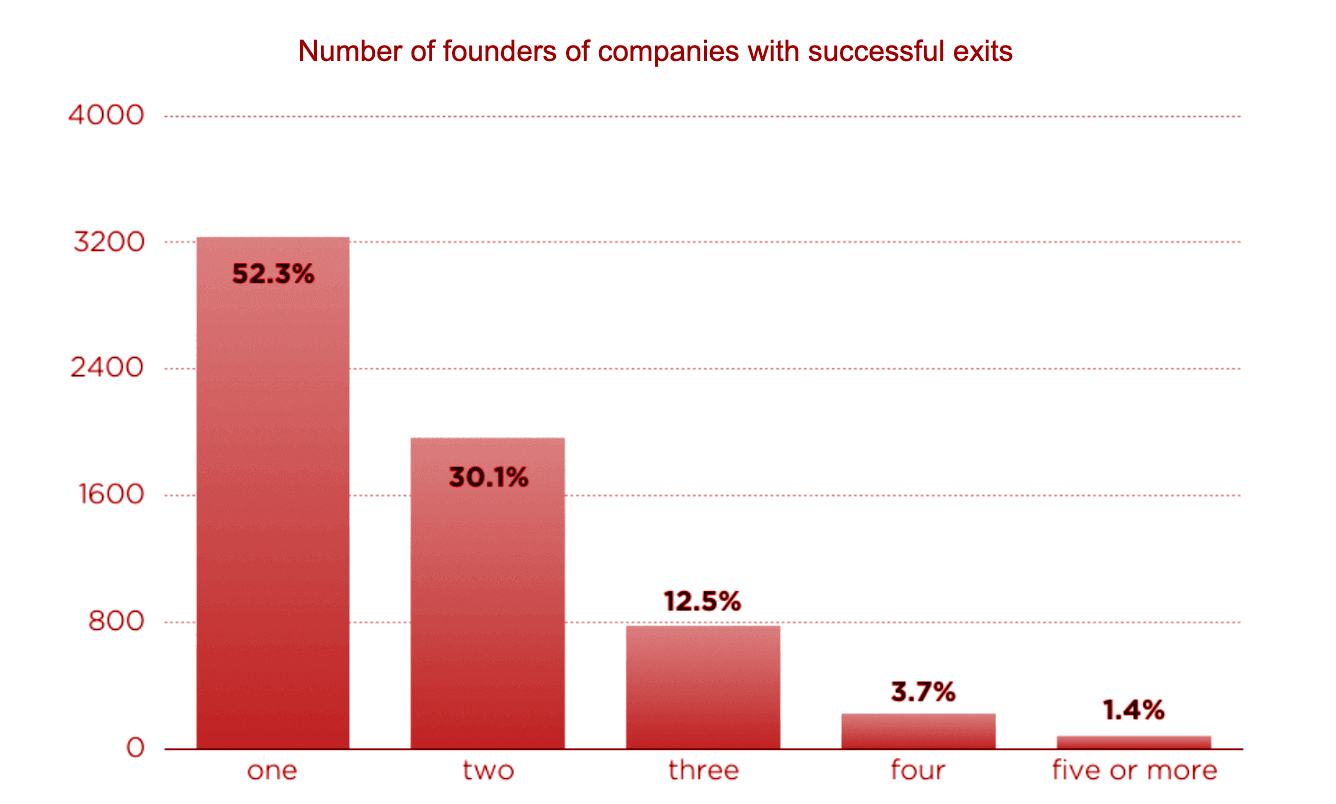
More Than 50% of Successful Companies Are Founded by Solo Entrepreneurs
According to this 2016 study by TechCrunch, not just the vast majority of the companies that raised more than 10 million were founded by solo entrepreneurs (45.9%), but the absolute majority (52.3%) of the startups that reached a successful exit had only 1 founder, to begin with.
So, what’s happening here? Why does everyone keep saying they need a co-founder? And most importantly, is going at it alone an advantage?
We don’t have a definitive answer for this, but there are several benefits to working as a sole founder rather than sharing your company with a business partner. Let's have a look at some of these in more detail.
source: TechCrunch, 2016
Complete Control: Steering Your Business with a Clear Vision
For good or worse, you decide the future of your own business. You have full control over the organisation, setting the policies and overall direction for years to come. If you have a great idea, you can act on it right away without having to worry about getting approval from anyone else. And most importantly, you don’t have multiple people pushing in different directions: you are at the helm, and the trajectory is clear(er).
Streamlined Company Structure: Keeping It Simple as a Solo Founder
Being a solo founder also keeps your company structure far neater. After all, the more you grow, with stakeholder after stakeholder looking for their cut, the more your structure is going to get complicated. By acting as a sole founder, you keep your company’s potential high without running the risk of losing friendships to complex legal battles. After all, if you go into business with your friends, there’s always a chance that it can get messy and ruin your relationships (not to mention the business itself).
More Flexibility: Shaping Your Business Without Compromise
Being a sole founder looks daunting from the outside, but once you’re up and running, you have all the flexibility you could ever need to drive your company forward and make a big impact on the industry in your unique way.
Working independently doesn’t necessarily mean that you’re working alone. You have the opportunity to work with companies of your choice to improve your range of products, and you can get investment from whomever you like. You get all the benefits of driving your brand forward without having to compromise on your vision.
Not to mention that you can have mentors, advisors, consultants and employees that can buy into your vision and help you out in your quest.
Do You Need a Co-Founder? Weighing the Pros and Cons
So, do you need a co-founder? The short answer is: it depends… Having a co-founder helps in many ways, but you also have the option of doing it alone. Just be careful of one thing, if you are going to recruit a co-founder (or you happen to have one or more already): make sure that the natural leadership is reflected in how you slice the pie…